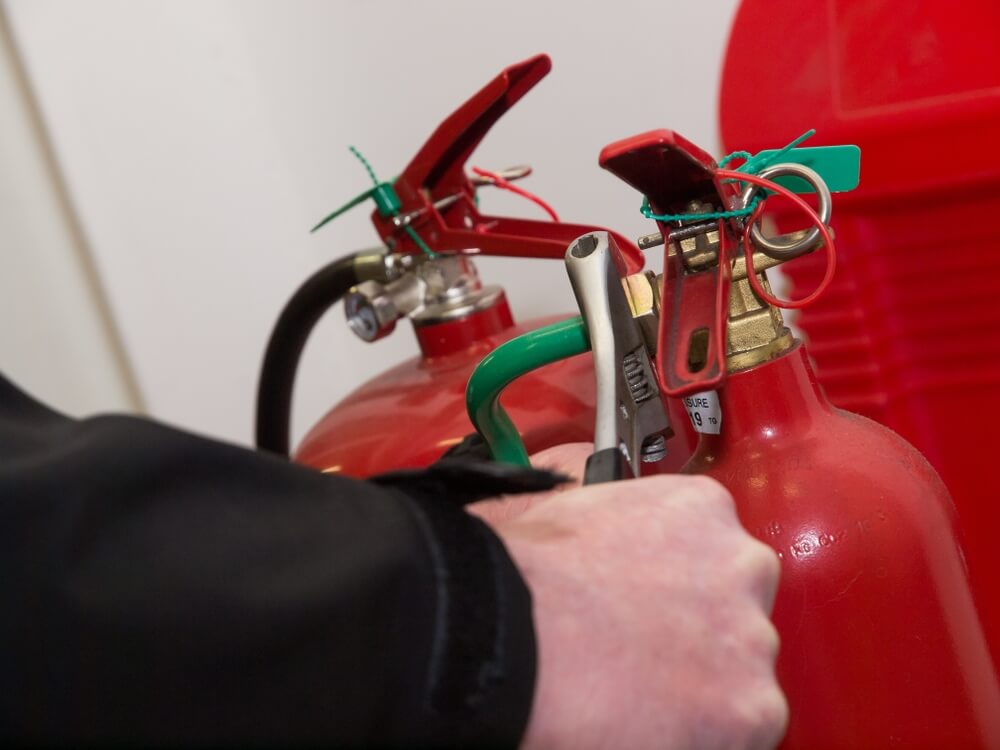
Top 10 Tips On How To Determine The Frequency For Testing PAT in Worcester
Determining the correct frequency for Portable Appliance Testing (PAT) is one of the most common and critical challenges for dutyholders under UK health and safety law. Contrary to widespread misconception, there is no mandated statutory interval–such as an annual requirement–specified in the Electricity at Work Regulations 1989. Regulation 4(2) instead imposes an obligation to maintain electrical systems in order to prevent danger. This legal duty is placed on the employer or the responsible person who must establish a maintenance regime that is suitable through a structured assessment of risk. This risk-based approach, strongly endorsed by the Health and Safety Executive (HSE), moves away from blanket testing schedules and requires a reasoned, documented justification for all inspection and testing intervals. The frequency is determined by evaluating what type of equipment it is, the operating environment in which it operates, who uses it, and how long ago that was.
1. Risk Assessment Is the Absolute Primeval Factor
The frequency for testing is not dictated by law. However, the dutyholder must conduct a sufficient and appropriate risk assessment. This assessment will be the foundation for all your PAT tests. This assessment must take into account all the factors that can cause an appliance become dangerous, and determine how often they should be tested and/or inspected to reduce that risk. HSE inspectors will look for this assessment, and they will compare it to the conclusions. Any testing schedule would be non-compliant and arbitrary without it.
2. Key Factors Influencing Testing Intervals
The risk assessment must systematically evaluate several core factors to determine a defensible frequency. The equipment type is one of them. Class I appliances, such as kettles and toasters (or power tools), require more frequent testing due to the earth-dependent nature. Environment: A harsher environment (such as on a building site, in a workshop, or in a commercial cooking area) calls for more frequent checks. Equipment that's used by well-trained employees might need less testing than equipment for the general public. Appliance Construction: Equipment that is robust may have lower risks than equipment with flexible cables. Prior History: Appliances with a fault history will need more frequent checks.
3. The Critical Role of Formal Visual Inspections
Formal visual checks are part of a maintenance regime that is legally valid and often more important than combining inspections and tests. The majority of faults are easily identified, including cable damage or loose plugs. A formal visual inspection performed by a qualified person in a low-risk environment (such as a desktop PC in an office) may be sufficient for many appliances. Routine electronic testing is not required. Risk assessment also determines the frequency of these formal checks.
4. User Checks and First Line Maintenance
User checks are the first line in defence before any formal process. Dutyholders must encourage users to conduct a pre-use visual inspection for obvious signs of damage such as frayed cable, burn marks or loose parts. The PAT system does not record user awareness, but it is an important part of a holistic approach to risk and can identify problems in between scheduled inspections.
5. Code of Practice for IET: Guidance
The IET Code of Practice, while not a law, provides valuable advice on the recommended frequencies for initial equipment. It offers a comprehensive table suggesting intervals for different equipment types in various environments (e.g., commercial, industrial, public). The table can serve as a starting point in the risk assessment of duty holders. This table might recommend 3-monthly inspections of equipment at a construction site, but 24-monthly for the IT equipment used in offices. These are initial recommendations to be adjusted based on actual experience.
6. The Concept of "Result-Based" Frequency Scheduling
For a truly sophisticated approach that is compliant, it's important to adjust the frequency of future tests based on results from previous tests. If an appliance, or a category of appliances, consistently passes its tests without fault over several years, the risk assessment can be reviewed to justify extending the testing interval. In the event that a certain type of appliance is frequently faulty, then it's best to reduce the testing interval. Enforcing authorities look favourably on this dynamic approach based on evidence.
7. New Appliances and Equipment
A common myth is that new equipment does not require testing. It may not require a formal combined testing before the first use but a visual inspection will still be required to check the equipment for transit damage, the correct wiring of the plug and its suitability for the UK (e.g. a properly fused plug). The risk assessment will determine the first test date for new equipment, integrating it into the existing maintenance schedule.
8. Hired or Borrowed equipment
Equipment brought into the building, such as tools hired by contractors or equipment they use, must be added to the PAT. The dutyholder has a responsibility to ensure it is safe before use. The risk assessment for such equipment is often conservative, typically requiring a formal combined inspection and test immediately before its first use on site, unless the hirer can provide valid, recent test certificates from a competent person.
9. Documenting the Rationale for Chosen Frequencies
Documentation is used to demonstrate compliance. The risk assessment should not only include the frequency chosen for each type appliance, but also document the reasoning behind this decision. This document is proof of "due due diligence." It should mention the factors taken into consideration (environment, users, equipment types) and, when applicable, refer to IET Code of Practices or the results of past testing history in order to justify intervals.
10. Regular Review of Intervals and Adjustment
The risk assessments and test frequencys that they prescribe are not static. Regulation 4 of the Electricity at Work Regulations 1989 requires maintenance to be ongoing. The dutyholder has to review the risks and the effectiveness testing intervals at regular intervals (e.g. once a year) or whenever there is a significant change. The system will remain effective and proportionate. View the recommended electrical equipment testing in Worcester for website advice including fire extinguisher for electrical fire, fire extinguisher company, extinguisher inspections, a fire extinguisher, electrical fire extinguisher, fire electrical extinguisher, fire electrical extinguisher, fire extinguisher fire extinguisher, a fire extinguisher, electrical fire extinguisher and more..
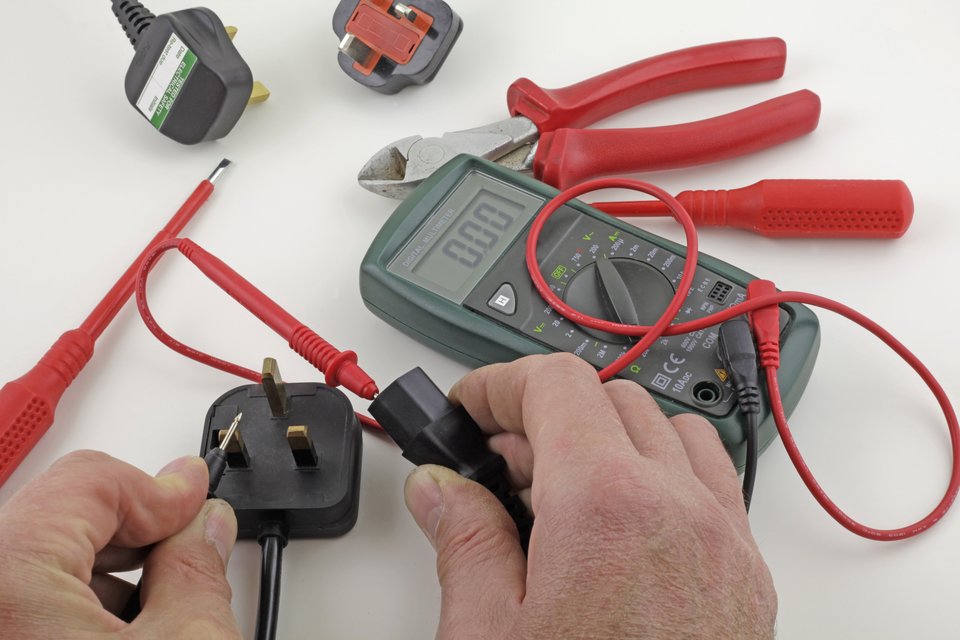
Top 10 Tips For Response Times For Services For Fire Extinguisher Services in Worcester
In the context of the fire safety regulations, response times for servicing aren't merely an issue of convenience, but a critical component of keeping legal compliance constant and operational security. The Regulatory Reform (Fire Safety) Order 2005 mandates that equipment for fighting fires be maintained in an efficient state and any time equipment is not functioning, damaged, or discharged represents a tangible breach of this obligation. To minimize your exposure to risk and to maintain insurance coverage and ensure that your operations are uninterrupted an organization must be prepared to respond to urgent requests and planned requests promptly. Insufficient response time can lead to unprotected premises and disruptions to business operations in audits or due diligence issues. Understanding the capabilities of the service provider to respond–from scheduling to emergency calls–requires an understanding of the various service tiers.
1. Scheduled Service Appointment Lead Time in Worcester
The ability of a service provider to schedule routine annual service efficiently is a good indication of their expertise. A well-organised business will normally contact you 4 to 6 weeks prior to the expiry date of your certificate to schedule your annual service. They should provide flexible schedule options and be able to confirm the date or the time of an engineer's visit. Unable to confirm a time slot (e.g. requiring reservations 3+ months in advance) or lead times that are excessive could indicate poor management of resources.
2. Definitions and Tiers of Emergency Callout Response
Not all reactive callers are created to be the same. Trustworthy service providers provide clearly defined levels of response to emergency situations, each of them having a guarantee for time. A typical urgent call for assistance, like a malfunctioning extinguisher or a missing extinguisher might have a 24-48 hour response deadline. A high-priority emergency (e.g. multiple units being disposed of following an incident of minor severity or a major defect discovered during an audit) is best addressed more quickly, usually within a few hours or the next day. For expectations to be managed effectively, these categories must be defined explicitly in the contract.
3. The geographical coverage of local engineers and availability in Worcester
Geographical Worcester is inherently related to response time. A brand with a national name might be well-known, however it depends on a network of regional engineers. Importantly, you need to find out if engineers are in your locality or if the engineers travel a considerable distance. This could impact the response time for scheduled services and in emergency circumstances. If a provider has a dense network local engineers, they will be able to respond quicker and with less cost. Always ask "Where is your closest engineer located near the postal code we have?"
4. Service Level Agreements – Guaranteed Response Time in Worcester
The key to a quick response is whether it's covered in your Service Level Agreement. It is useless to make promises that are vague, such as "we will respond promptly". A solid SLA has measurable and measurable Key Performance Indicators such as "We accept a service request within two hours" or "We will be on site to deal with urgent emergencies within four hours." These guarantees will provide recourse to the service provider in case they repeatedly fail to honor their obligations.
5. Communications Protocols for Dedicated Helplines in Worcester
Communication is the key to a rapid response. Discover the procedure employed by the service provider to receive and process service requests. Are there specific email addresses or lines for customer service available for urgent issues? Are they monitoring the helpline both during and outside normal business hours? The best providers will offer you direct access to a coordinator that can immediately dispatch an engineer which means there's no need to wait in a line.
6. Out-of-House and Weekend Support Capability in Worcester
The risk of fire and malfunction is not restricted to 9-to-5 hours. The ability to contact support after an off-hours event or in high-risk areas (e.g. data centres manufacturing 24/7 or care homes.) is crucial. Find out if the company is able to provide a real 24-hour emergency call-out service, or just assistance during normal hours. If they offer after the-hours assistance for emergencies, ensure that you inquire about the associated charges and their guaranteed response time as this could differ from the support they provide during normal working hours.
7. Fault Resolution vs. Initial Attendance Time
It is important to distinguish the duration of the first response (an engineer who visits the Worcester to evaluate the issue) as well as the amount of time it takes to resolve the fault (the time when the equipment has been fully repaired or replaced and is compliant). A provider might attend quickly to condemn a faulty extinguisher, but take several days to source and install a replacement and leave the area without protection. Your SLA must cover both measures. Ideal, a provider would try to fix issues such as the absence of a fire extinguisher during the very first time they visit. This is accomplished by storing common replacement parts in their van.
8. Impact of response delays on insurance compliance and compliance in Worcester
The consequences of a slow response time is critical. Every day a malfunctioning or faulty extinguisher has not been replaced, is a day that your building isn't in compliance with the Fire Safety Order. The Fire Authority can take action against you during an inspection. It is also possible that your insurance is contingent on being in compliance with regulations regarding fire safety. Insurance companies can make use of a delay of substantial percentages to correct an obvious fault as a basis for invalidating a claim, by claiming that you did not have adequate protection.
9. Capacity of the provider resource and management of workload in Worcester
The speed at which you can respond is an indication of the management team's abilities. Question their engineer to client ratio and find out how they handle peak load demands. A company that is stressed will have engineers running behind on their routine visits and not equipped to effectively handle emergencies. In the process of tendering be sure to inquire with the company how it will respond to an event that required the replacement of a number of extinguishers at your site. Answering this question will give you a good idea of their capacity to manage large-scale and swift responses.
10. Monitoring and reporting on performance and evaluation in Worcester
Professional service providers don't simply make promises. They also measure the quality of their services. They should use systems to measure response times across all kinds of calls. In addition, they must send you regular reports of their service (e.g. each year) in order to prove that the SLAs outlined in your agreement are being met. This transparency enables you to conduct reviews based on evidence of their service and holds them accountable for maintaining the high standards required to ensure your fire safety compliance. Take a look at the top rated fire extinguisher maintenance in Worcester for blog advice including fire extinguisher fire, fire extinguisher for an electrical fire, fire extinguisher servicing, fire extinguisher service near me, a fire extinguisher, fire extinguisher testing, fire extinguisher using, electrical extinguisher, fire extinguisher for an electrical fire, fire service fire extinguisher and more. More broadly, take a look at the top rated fire protection for more.